Its English name is derived from a Cree word, misâskwatômina. In the Dene Suline language, it is called k’injíe.
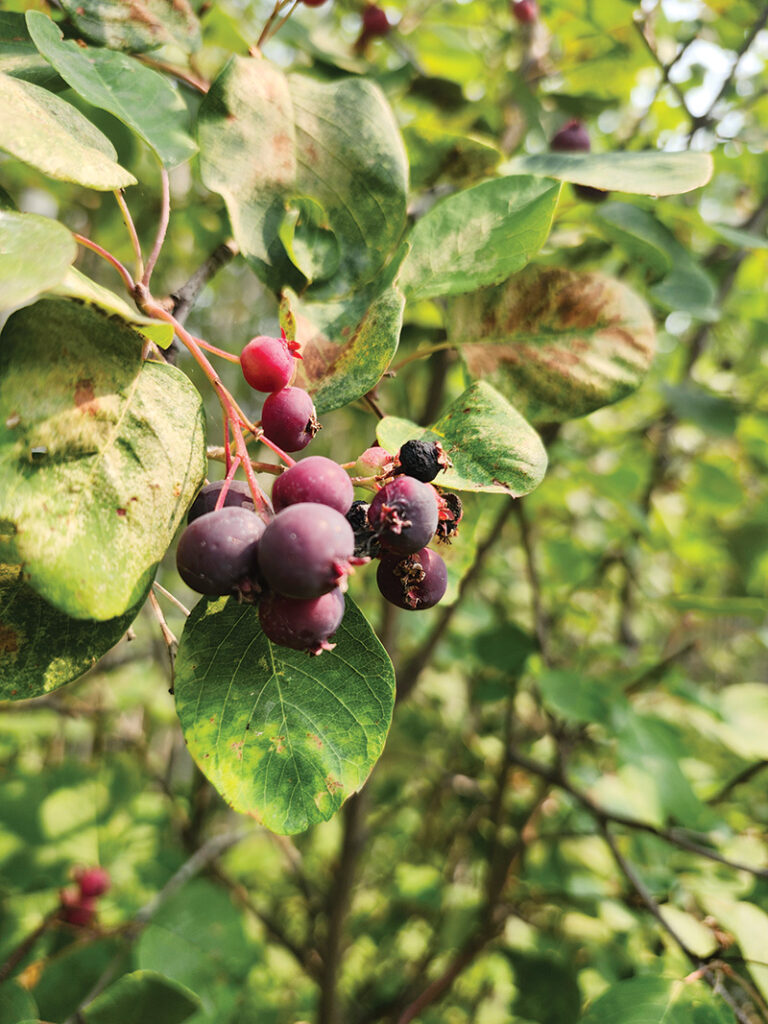
Prairie people today know it as the saskatoon, a dark purple berry that ripens anytime from late June to mid-July. It grows abundantly across the prairies and in the boreal forest, and it has nourished people, birds, and animals for thousands of years.
Indigenous people taught the very earliest European explorers, traders, and settlers about saskatoons. This knowledge was one of the first gifts that made European incursion into the North American continent possible.
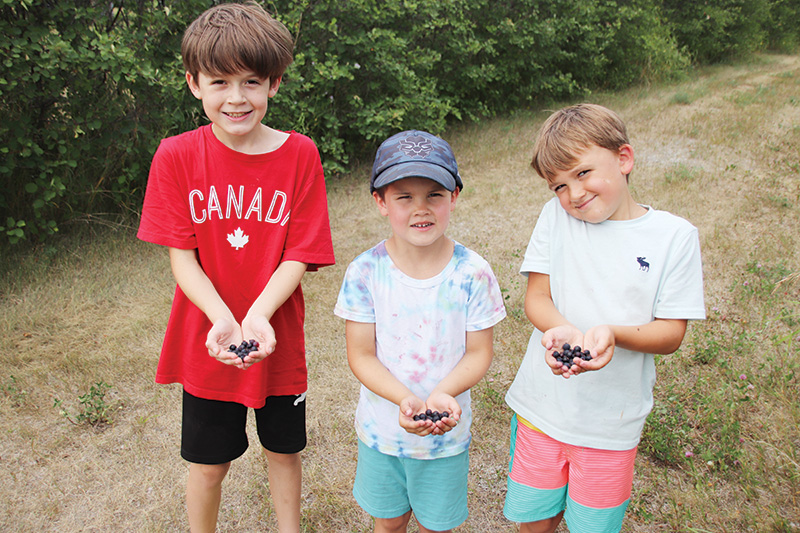
If you love saskatoons—on your morning bowl of cereal, in pancakes, made into jam, or baked into a delicious pie—now is the time to gather them.
The saskatoon berry is considered to be a “superfood.” It offers a high concentration of antioxidants, fibre, and essential vitamins and minerals. It is associated with a range of health benefits, including reducing oxidative stress, inflammation, and the risk of chronic diseases like heart disease and cancer. Its high fibre content also aids in digestion and blood sugar regulation.
Saskatoon bushes are not difficult to find. They prefer soil that drains deep, like a sandy or clay-based soil rather than a rich loam. They producebest near a water’s edge or along a roadway or cut line, where they can be exposed to full sun.
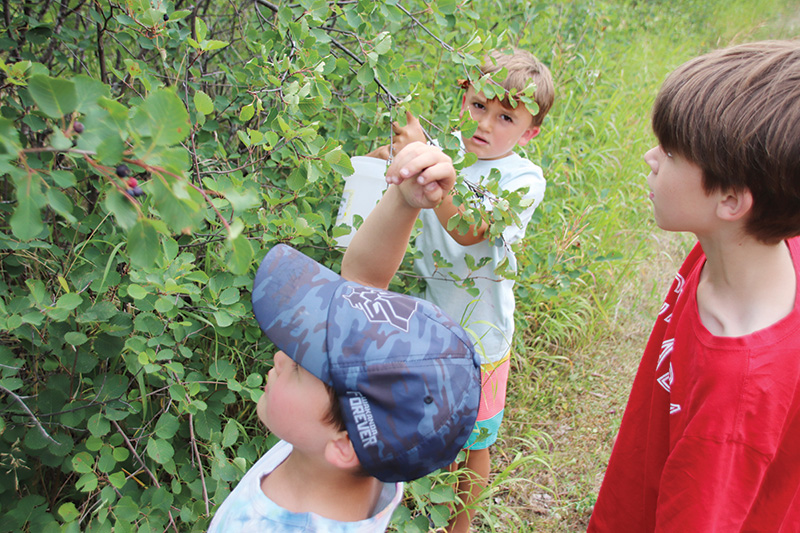
And they are easy to pick. The berries can be found within easy reach, and the branches can be bent down to bring the uppermost fruit to you.
They are a hardy species, but production can vary. They bloom early, so a spring frost can kill the blossoms. A rainy spring can keep the bees at home, affecting pollination. And they can be affected by heat or drought.
Respect found plenty of plump saskatoons in our favourite picking spots this week, but some people have reported a relatively poor crop of small berries. Much depends on where the rain fell.
Lori Toker owns and operates Rocky Meadows Country Getaways, one of several area u-pick operations. Thanks to irrigation, she has an abundant crop ready to pick right now.
With all those berries just outside her front door, she hasn’t had to go foraging. But she has heard the reports of a poorish wild crop.
“I’ve been hearing that they’re dry and not very good, because lack of moisture,” she said. She says there isn’t necessarily a difference between wild saskatoons and cultivated ones, except that the bushes in commercial orchards aren’t as dependant on rainfall—she can turn on the tap and give her berry bushes the water they need.
There is more than one variety of saskatoon, she says, and some produce fruit that is better for one use over another. She has planted the Northline variety.
“There’s different varieties. Some of them are bigger than others, some of them are better for jam, some are better for fresh eating,” she said. “The Northline, we were told when we bought them, were the best for all—jam, pies, and eating.”
For some, a summer without saskatoon pie is a summer wasted. And a couple hours picking, either at a favourite wild stand of saskatoon bushes or at a local u-pick, is a pleasant solitary or social activity.
But hurry! This offer is available for a limited time.