Pileated woodpecker nest sites can house generations of wildlife
Pileated woodpeckers are big and beautiful. It’s always a thrill to see one in the wild or in the back yard.
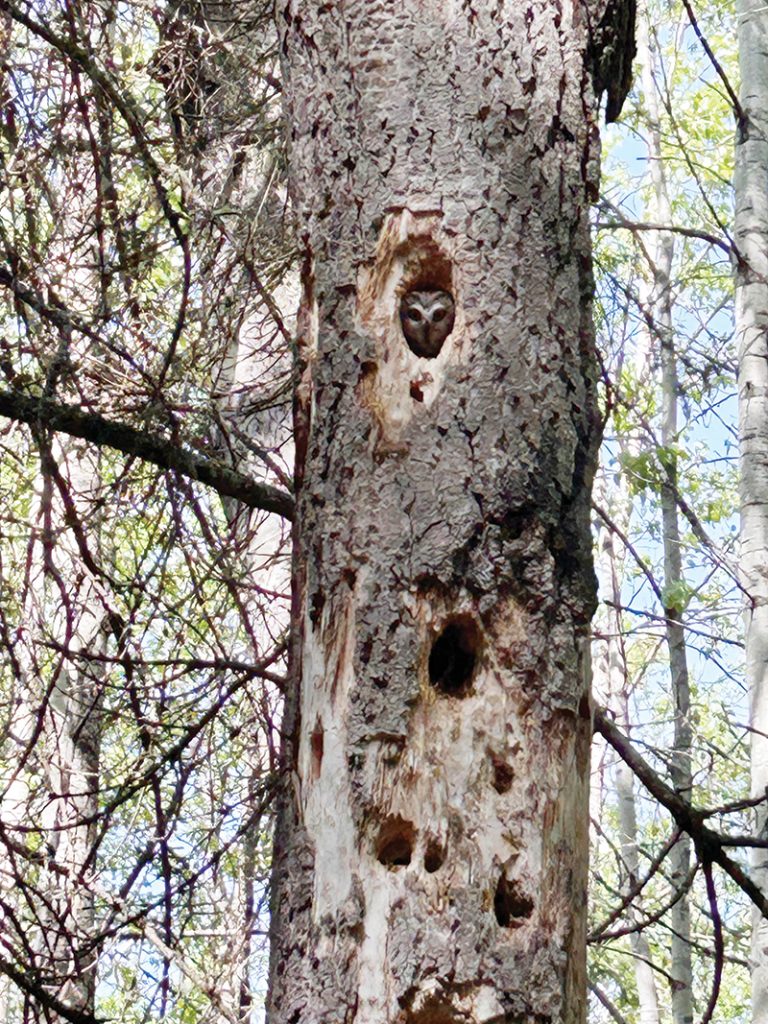
In fact, they are the largest woodpecker species in North America, and an important keystone species for other wildlife. The nest cavities they excavate in tree trunks support other birds, squirrels, and even bats for years after they have been abandoned by the original occupants.
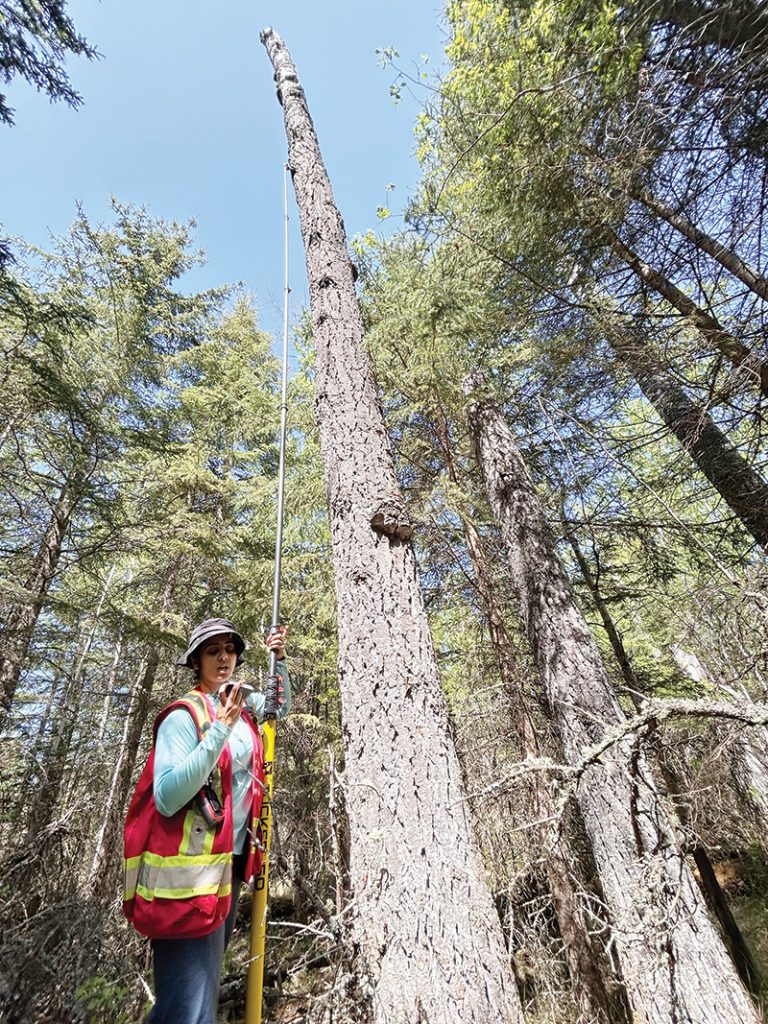
Simran Bains, a Ph.D. student at the University of Alberta, was in the Cold Lake area earlier this month as part of a province-wide research project to improve detection and management of the nest cavities.
Under recent changes to the Migratory Bird Convention Act, pileated woodpecker nest cavities are now federally protected for at least 36 months after their last known use by a migratory bird species.
Anytime a migratory bird uses a cavity, the three-year protection resets, so trees can’t be disturbed or cut down without a permit.
Bains said the change was enacted in 2022, “so it’s still kind of a work in progress and kind of a hot topic in the bird realm, at least in the conservation and government realm,” she said.
“My job is basically finding cavities, monitoring them or seeing how we can monitor them effectively, and then helping to build maps and tools to build more models that can be used by government, industry, landowners to help comply with the legislation.”
In the past four years Bains has done a lot of field work.
“We’ve searched about 1,190 hectares [more than 2,900 acres], and more this year. We’ve found about 500 cavities of all different sizes, so made by all different types of woodpeckers, just in case we want to broaden out to other woodpecker studies in our lab,” she said.
They collect data using photography and acoustic equipment.
“We’re trying to see where we can prioritize search efforts if someone has a big project coming through, like a pipeline, and then also see if we can prioritize which trees might need more protection than others.”
For a woodpecker looking to excavate a nest cavity, not just any tree will do. They prefer trees where the wood is already compromised by a condition known as heart rot, making their work easier.
“In Alberta, they like big aspen trees because we don’t get very many big pine compared to BC. But I think it really depends on the resource that’s available,” Bains said.
“Here we have a lot of bigger aspen trees to some degree, so they seem to excavate in those ones. We’re trying to do some more surveys in coniferous forest to see if we can find any cavities in pine.”
It’s not just a matter of protecting pileated woodpeckers. After those big birds do the excavation work, the nest cavities are reused by other animals year after year.
“There is a concept called nest web—you have woodpeckers, they excavate the cavities, and those cavities are then reused by either weaker excavators or secondary cavity nesters,” Bains said.
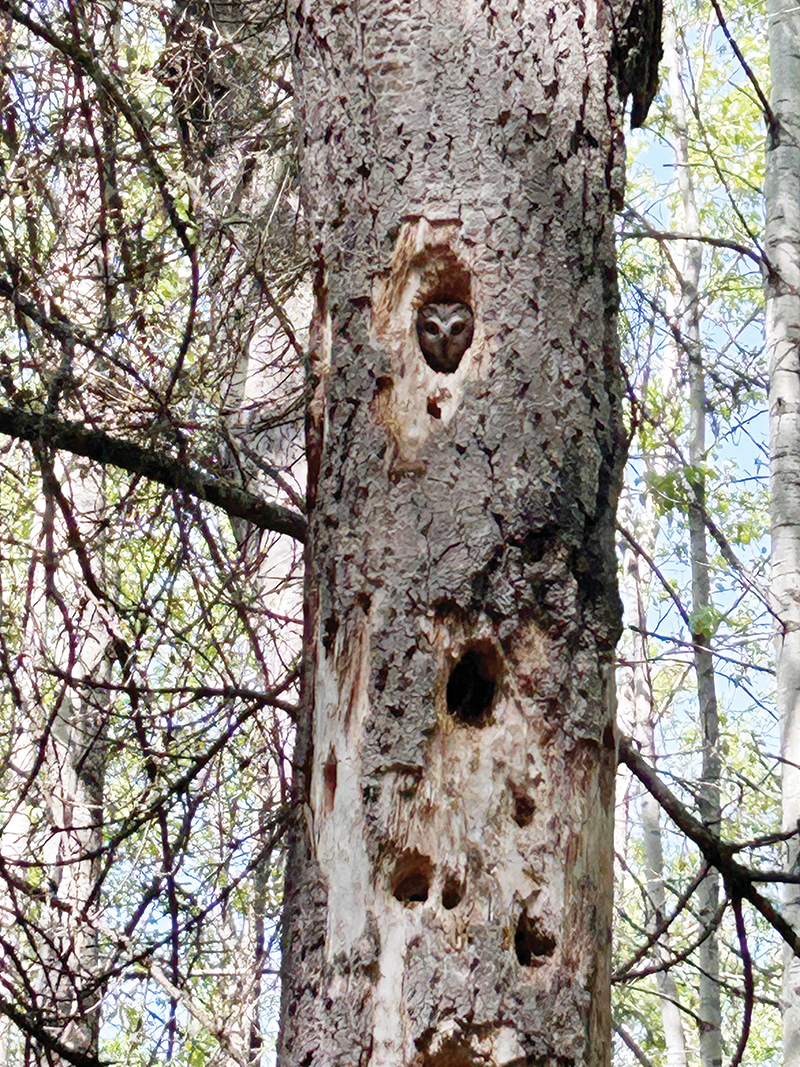
“In the case of pileated woodpeckers, their cavity entrances are big enough and deep enough that they are often reused by, let’s say, different species of ducks. We’ve had owls in ours, we’ve found kestrels. So those are primarily why they are protected.”
Bains and technician Jordan Turcotte have moved on from Cold Lake to continue their research in other parts of Alberta.
The work is rewarding, she says, but like anyone working outside in a northern Alberta summer, there are challenges—including bugs.
“Oh boy, this year is really bad,” Bains said. “But, you know, anything for the birds. We’ll suffer through.”