A much-needed expansion and modernization of St. Paul’s Sunnyside Manor is set to begin in 2026 following a $16 million injection from the Government of Alberta.
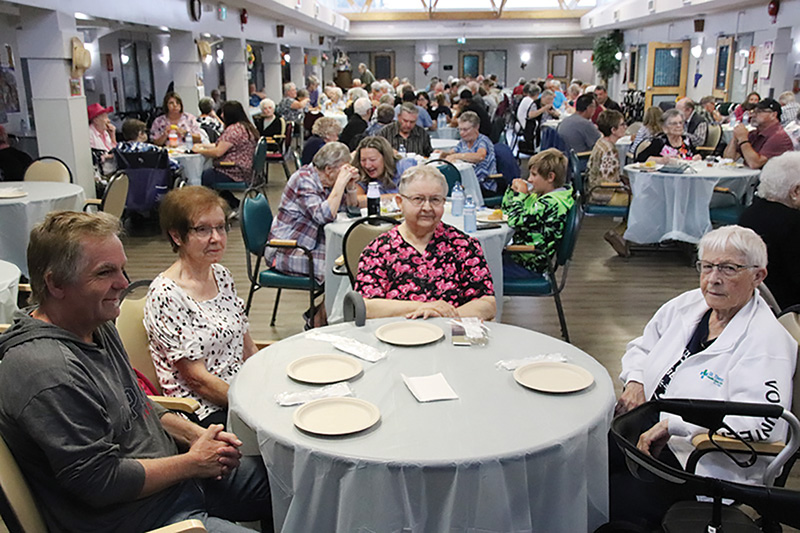
Sunnyside Manor is an independent-living seniors’ lodge operated by the MD of St. Paul Foundation.
The modernization project is estimated to cost between $57 and $59 million and is expected to take two and a half years to complete. The project will increase the capacity of the lodge by more than 30 suites.
Nine of those additional suites will be two-bedroom units, further increasing the facility’s residency levels.
The extensive project is moving forward after eight years of advocacy, three comprehensive needs assessments carried out by the MD of St. Paul Foundation, and a significant increase to the municipal seniors’ housing requisition. The Foundation is governed by a board of directors consisting of elected officials from the Town of St. Paul, Town of Elk Point and County of St. Paul.
For Maureen Miller, former Town of St. Paul mayor, the need for an overhaul of Sunnyside Manor was apparent even before her time in office following personal experience with the facility.
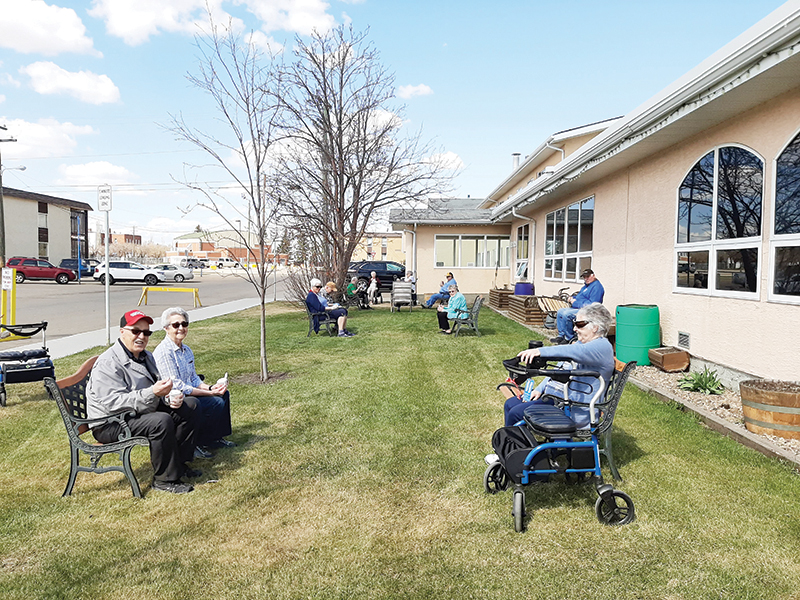
“The recognition at that time of the small spaces, the lack of opportunities for couples to age together, the inability to have safe outdoor spaces to live and play in,” said Miller. “For me, this has been an eight-year activity within the role of mayor and in the latter four years as the chair of the MD Foundation.”
The Foundation submitted three needs assessments over three consecutive provincial governments before provincial funding was finally secured for the project in November.
The provincial contribution is roughly a quarter of the overall Sunnyside rebuild. Miller says the Foundation could not have moved forward without the province’s financial investment.
“We only have limited resources as far as a revenue pool. The government needs to pick up some of these costs. So, I’m grateful for the $16 million, but we could not have started it without the $16 million from the province. It would have been impossible.”
The three partnering municipalities will be collectively putting forward $4 million for the project. However, Miller said, “If we can’t shave that $59 million down to $57 million then we may need to get $5 million in total from the municipalities.”
The MD Foundation will borrow through Canada Mortgage and Housing Corporation (CMHC) for the remaining cost of the development. The federal Crown corporation will forgive approximately $3 million of that loan.
Through the rebuild of Sunnyside Manor and the demolition of the existing 32 cottages, the facility will now be owned and operated by the partnering municipalities through the MD Foundation. “The province is no longer owning these facilities,” Miller said.
Next generation of seniors housing
There is no question that the needs and wants of St. Paul’s seniors have changed over the 60 years since Sunnyside Manor was first constructed in 1965.
While additional rooms were the focus of the building’s past five renovations, other key features including kitchen space, dining areas, and commercial laundry were never increased in accordance with the number of new units constructed, says Brigitte Sakaluk, CAO of the MD St. Paul Foundation.
During her 11 years in the role of CAO, Sakaluk says the need for facility improvements has always been present. “But I think Covid really drove it home,” she said.
Sunnyside Manor currently contains 113 units, but 15 of those units are kept vacant because they lack exterior windows. An additional 51 units are too small to accommodate wheelchair or walker access.
Despite a waiting list of 80 individuals, the current layout of the lodge’s suites and amenities can be a deterrent for area residents who are considering moving from their homes to affordable seniors housing.
According to Sakaluk and Miller, the eight years spent seeking provincial investment for the Sunnyside modernization has allowed for greater community consultation, fine tuning, and a deeper understanding of what designs contribute to a thriving and vibrant assisted-living facility.
“Seniors of today are looking for more and more. Like having two people living in a unit together, whether friends or couples or siblings,” says Sakaluk.
In total, 90 units will be constructed through the upcoming rebuild. This will be a mixture of one-bedroom, two-bedroom and studio suites.
The new build will also feature balconies for the second floor, private green space, sitting rooms, recreation spaces, and more parking for residents.
“I believe seniors deserve the best quality of care,” Miller said. “They have raised children, they have left a society that they worked hard to provide for and they deserve the best quality of life in their latter years.”
Growing pains
During the construction phase, Miller and Sakaluk acknowledge that there may be some inconveniences for the current residents of Sunnyside.
The upcoming renovation will be extensive. Only the 2003 and 2008 expansions will be kept and connected to the new build.
“The original Sunnyside, not just the cottages, are being ripped out. All of that inner centre is also being pulled out,” Miller said. “There will be hard days for sure. On the upside, the residents do want to stay in their community. They don’t want to move to the city.”
Sakaluk says she and her team will do their best to mitigate challenges related to temporary resident relocations or construction-related noise.
“It is a sacrifice, but if we don’t do this, I don’t know where people are going to go in the future,” she said. “We have a very large senior population. They estimate by 2046 the requirement for this area will be 200 units.”
The Sunnyside rebuild is already designed to allow for future expansions to the
building.
“Even with this major redevelopment, demographic growth means demand will continue to rise in the years ahead,” said Scott Cyr, MLA for the Bonnyville-Cold Lake-St. Paul constituency.
Cyr began representing the riding in 2023. In that time, he says, “Many seniors shared concerns about not getting a space when they needed one, and that uncertainty created real stress for families. When capacity is limited, seniors may wait longer than they should or be placed temporarily in hospital settings that are not intended for long-term supportive living.”