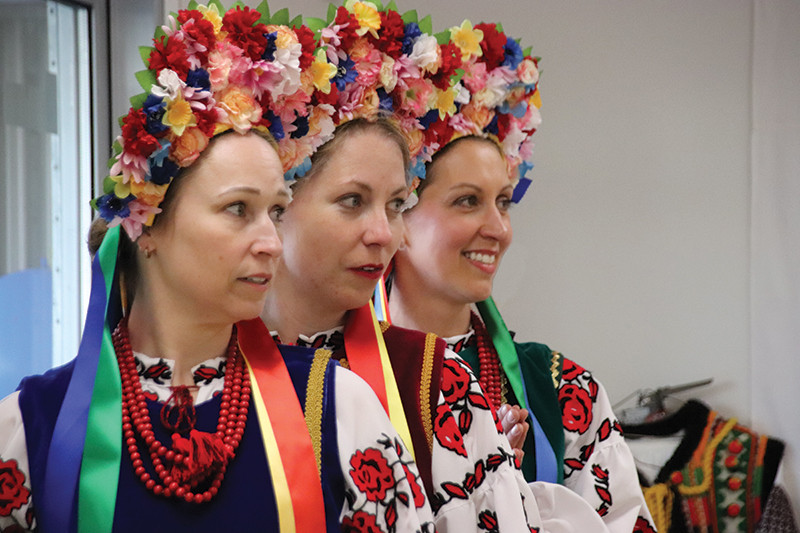
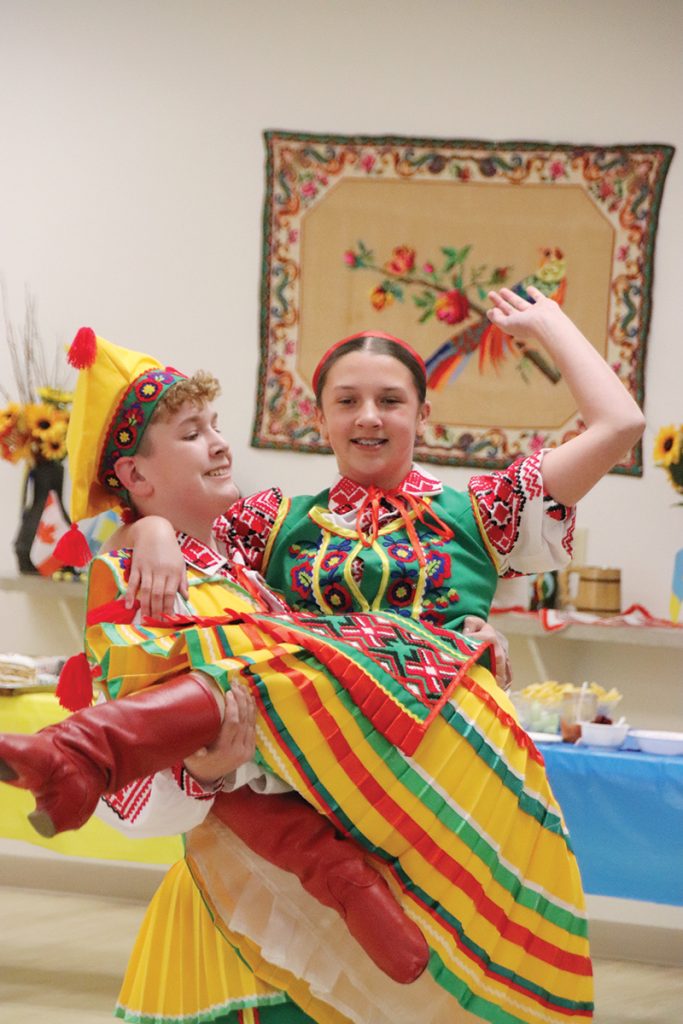
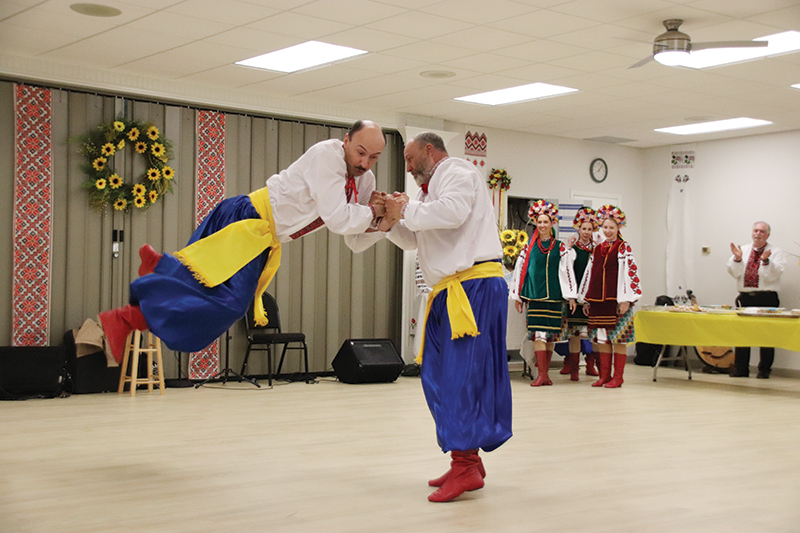
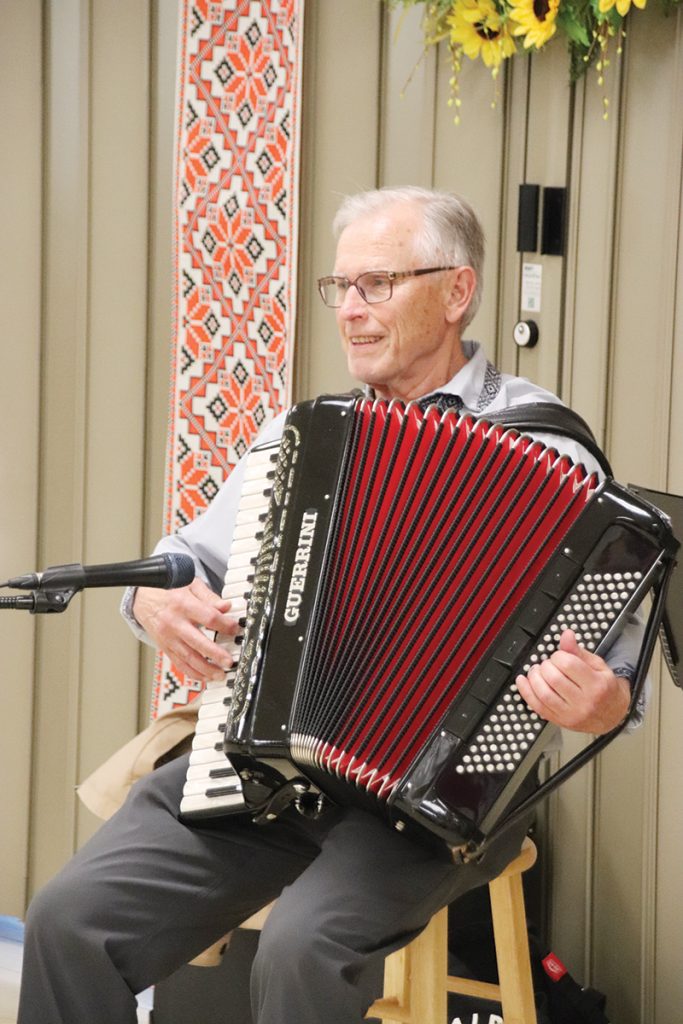
The St. Louis Parish Hall in Bonnyville was alive with colour, music, dance, food, and fellowship on May 21 as Ukrainians and the community at large celebrated Vyshyvanka Day.
“Vyshyvanka” refers to traditional embroidered Ukrainian clothing, an important historical and cultural symbol. This year’s celebration in Bonnyville marked an alignment of significant anniversaries for the event.
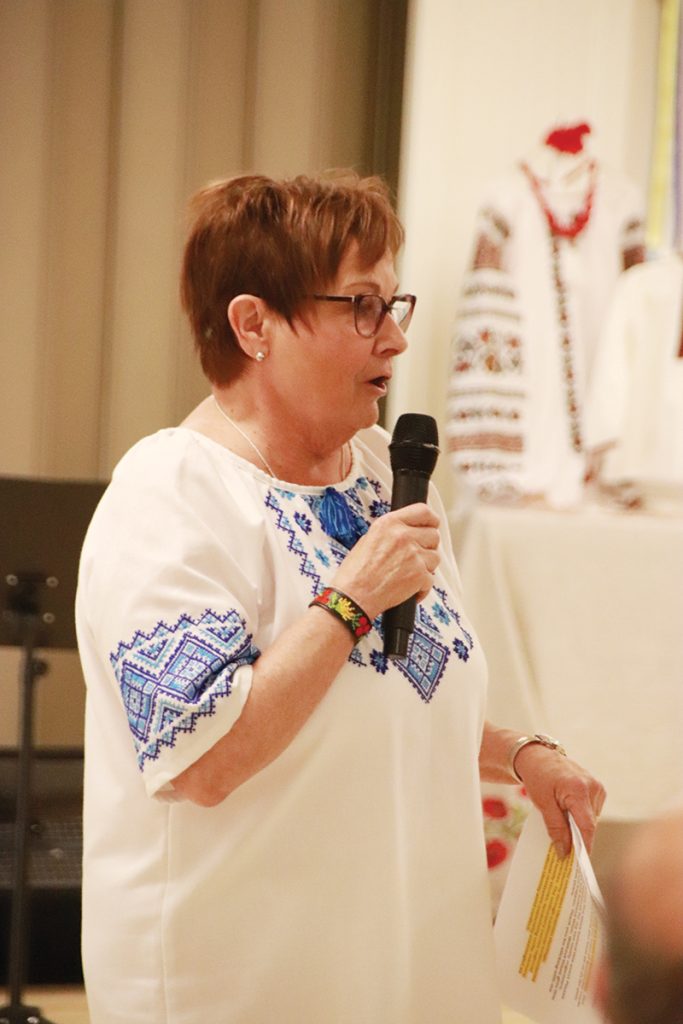
“It was started 20 years ago at a university in Chernyvsky, in western Ukraine, by a student,” said Bonnyville organizer Genia Leskiw. “The first year was just a group of students doing it and then they enlarged it and slowly it expanded.”
This year is the 20th anniversary of that first Vyshyvanka Day, an initiative of student Lesia Voroniuk. It’s also the tenth year of celebrations in Canada.
The tradition took hold in Bonnyville in 2021.
“Five years ago, FCSS called me to come to a meeting. They were getting an influx of Ukrainian immigrants because of the war,” Leskiw said. “They asked me if I’d be on their committee because I knew a lot of the people in the area.”
She wanted to bring Ukrainians living in Elk Point, St. Paul, Cold Lake, and Bonnyville together.
“This was in April. And I said, well, why don’t we put on a Vyshyvanka Day? It was right after Covid, people haven’t gone out very much, so we got a group together to organize it.”
That first effort drew more than 200 people. Similar crowds have attended ever since.
Leskiw said the joyful celebration is a testament to Ukrainians’ pride and resilience. There have been waves of immigration to Canada from Ukraine as people have sought a life free from famine, war, and persecution.
“My husband’s grandparents came before the First World War and they had lots of struggles—a different type of struggle, just surviving in the wilderness of Alberta,” she said.
“And then my parents came after the Second World War, settled in Montreal, didn’t know the language, and had to survive that first week without any pay.
“My dad always would say, ‘you kiss the ground that you walk on. In Canada, I could be the Ukrainian I could never be back home,’ because he lived under Soviet times. Here you can go to your churches, you can speak your language, you can follow your traditions.
“That’s what being a Canadian is,” Leskiw said. “It’s the part of being able to maintain your own within the framework of Canada.”