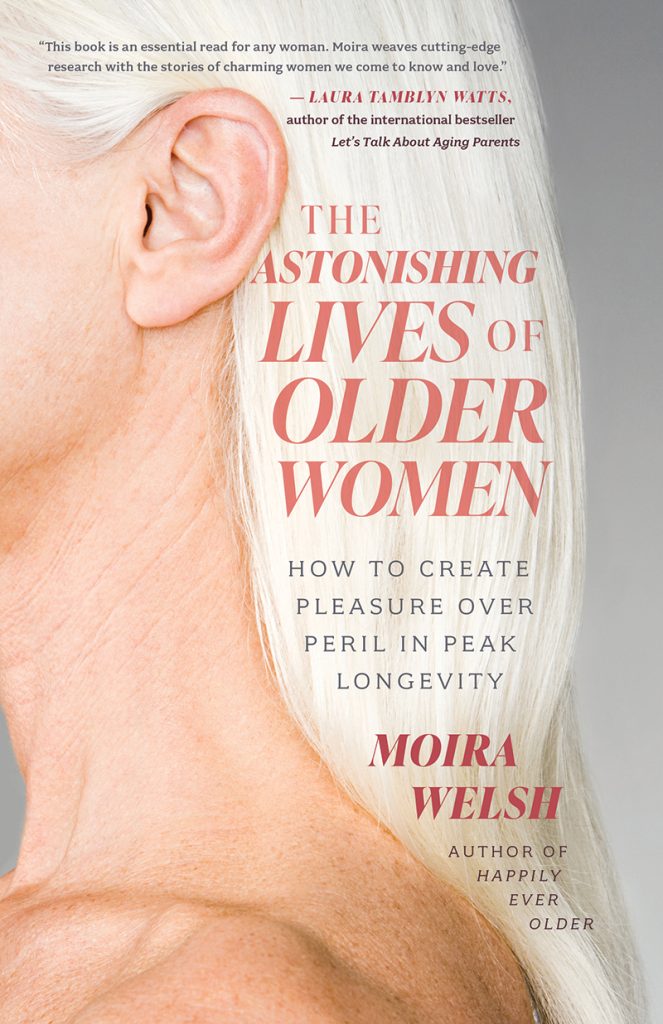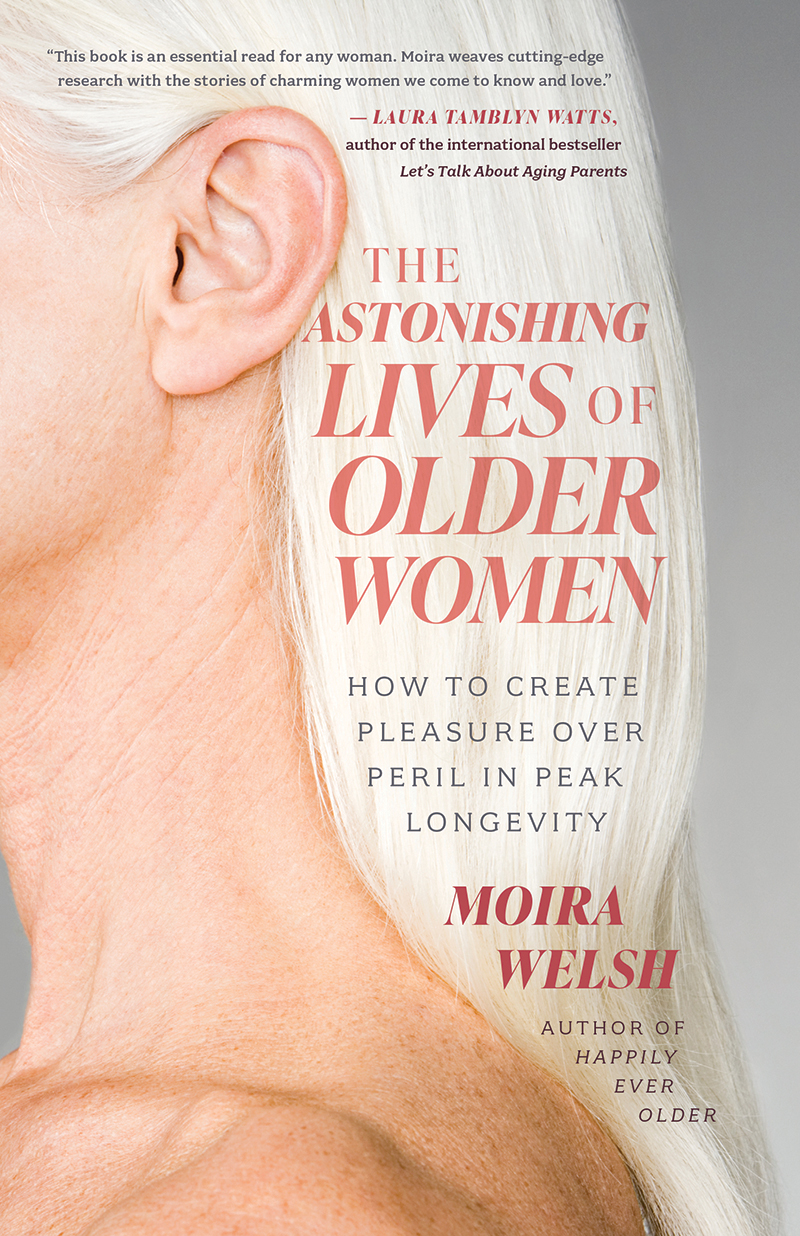
REVIEW: The Astonishing Lives of Older Women: How to Create Pleasure Over Peril in Peak Longevity (2026) by Moira Welsh, published by ECW Press. 216 pages.
In my decades-long career as a banking executive, I sat across the desk from hundreds of young women, helping them navigate the complex path toward financial freedom. Beyond those individual meetings, I took deep pride in training hundreds of financial advisors and personal bankers, equipping them to provide sound advice to women across the country.
Our goal was clear: to ensure that when these women reached their senior years, they could live exactly how they wanted to, with the autonomy that only financial security provides. I spent those years believing that with the right tools and early intervention, the “golden years” would be just that: golden.
Yet today, having recently stepped into the role of Chief Administrative Officer for the MD of St. Paul Foundation, I am faced with a much harsher reality. Despite my background in finance, I am frequently shocked—and deeply saddened—by the sheer number of women entering our housing systems who are financially ill-prepared for retirement. It is this unique vantage point, at the intersection of executive finance and community housing right here in our beautiful Lakeland region, that made reading Moira Welsh’s latest work, The Astonishing Lives of Older Women: How to Create Pleasure Over Peril in Peak Longevity, such an emotional experience.
Welsh, an investigative journalist for the Toronto Star, has spent years dissecting the systems that govern our later years. In this book, she moves beyond the clinical to offer a profound and visionary roadmap for what she calls “Peak Longevity.” For anyone in a leadership role—especially those of us tasked with the stewardship of care and housing infrastructure in Alberta—this book is more than a collection of stories; it is a call to move from a reactive model of eldercare to a proactive model of elder living.
The Gender Pension Gap: A Systemic Failure
Welsh begins by stripping away the glossy, sanitized version of retirement often sold in bank commercials. She introduces us to the “Invisible Demographic”—women who have spent decades as the backbone of their families and communities, only to find themselves facing a “peril” that is often systemic rather than personal.
As a former banker, the chapter on the “gender pension gap” hit particularly close to home. Welsh details how years of caregiving, lower wages, and life transitions like divorce or widowhood leave women uniquely vulnerable. I see this every day in the housing sector. We are witnessing a crisis where women in their 70s and 80s, who worked hard their entire lives, are now navigating housing insecurity because the financial systems we built were never truly designed with their life cycles in mind. Welsh’s reporting on a woman in her 70s living in her car is not just a heart-wrenching anecdote; it is a data point in a failing social architecture that we, as leaders and neighbours, must address.
Building a “Community” in St. Paul
Serving the community of St. Paul, I feel an immense sense of responsibility and excitement. I am now in a position to directly impact the lives of elder men and women by creating true community and fostering lasting relationships. These are the individuals who built our province, raised our families, and contributed their labour and love to our society for decades. They deserve more than just a roof over their heads; they deserve a space where they can continue to thrive.
Welsh argues that isolation is as much a threat to longevity as financial instability. In my current role at the Foundation, I see the opportunity to transition our housing models from mere facilities into vibrant neighbourhoods. By fostering environments that encourage connection and mutual support, we are honouring those who contributed so much to our collective history. It is a profound honour and a privilege to be able to continue imparting financial knowledge to this community, helping our seniors navigate their “Third Act” with the dignity they have earned.
From Reactive Crisis to Proactive Pleasure
The subtitle of the book, How to Create Pleasure Over Peril, is where Welsh’s lens turns toward solutions. She challenges the culture that defines success only by productivity and asks what happens when the “working years” end but life continues for another 30 or 40 years.
Welsh advocates for a “Third Act” defined by purpose and community. She explores innovative housing models where older women share homes, pooling resources and emotional support to combat the epidemic of loneliness. From my perspective as a CAO, this is revolutionary. We are currently managing significant capital transformation projects, and Welsh’s book suggests that the social infrastructure—the relationships we build—is just as important as the physical walls. She argues that longevity should be viewed as a period of expansion. In leadership terms, this is “strategic reinvestment.” We aren’t just sustaining lives; we are enriching them.
The Role of Mediation and Financial Agency
Throughout the book, Welsh introduces us to experts—feminist economists and legal scholars—who provide the structural “how-to” for this new era. There is a strong undercurrent of the need for mediation and transparent communication within families.
As someone who completed the Mediation Course through Schulich School of Business in Toronto and who practices servant leadership, I found her emphasis on these “difficult conversations” essential. Welsh details the legal protections and “living apart together” (LAT) relationships that allow women to maintain autonomy while enjoying companionship. These are essentially governance structures for personal life. Welsh shows us that the same principles of transparency and clear expectations that drive a successful boardroom must also drive our personal futures. By mediating our own aging process and communicating our needs early, we move from being managed by the system to being the CEOs of our own longevity.
A Visionary Call to Action
The Astonishing Lives of Older Women is not just for those approaching their senior years; it is a book for those of us currently building the world we will inhabit. Welsh’s reporting is immersive and empathetic, but it never shies away from the hard truths of financial instability and systemic neglect.
When we look at regional development and community foundations, we must ask: Are we building warehouses for the elderly, or are we building vibrant ecosystems where people can thrive? Welsh argues for the latter, suggesting that when we create environments where older adults are safe, seen, and financially secure, the entire community benefits from their wisdom and resilience.
Final Reflections
Reading this book felt like a masterclass in humanizing leadership. It reinforced my belief that empathy and financial literacy are not mutually exclusive; they are the dual engines of progress. Welsh has provided a visionary framework that aligns perfectly with a proactive, community-first mindset.
I walked away from this review with a renewed sense of urgency. Whether I am reflecting on my career in banking—having trained the advisors who help women plan for their futures—or leading the MD of St. Paul Foundation to house those same women today, the goal is the same: ensuring that the “Peak Longevity” Welsh describes is a reality for all who have contributed to our world.
Moira Welsh hasn’t just written a book; she has drafted a strategic plan for the soul. It is an essential read for anyone committed to a future where aging is not a problem to be solved, but a journey to be celebrated with dignity, community, and pleasure.
Key Takeaway: Financial freedom is the foundation of longevity, but the intentional creation of community and the sharing of knowledge are the structures that allow the human spirit to flourish.
From banker to builder: Pauline DeLeon is the Chief Administrative Officer of the MD of St. Paul Foundation, which provides affordable housing for seniors and others in St. Paul and the County of St. Paul. She brings extensive experience in the banking sector to the CAO role.