Older adults are visiting food banks more often, operators say
In today’s economic climate it is no surprise that residents in the Lakeland are feeling the pinch at the grocery store.
Since 2022, grocery prices have risen by about 22 per cent while other consumer prices have gone up on average by 13 per cent, according to an article released by the Bank of Canada in February.
Food inflation continues to be a year-over-year concern for Canadians, says the country’s central bank. “In December, food inflation reached five per cent, the highest since late 2023,” the article reads.
But higher sticker costs on today’s groceries are different from what was seen in the months and years following the Covid-19 Pandemic.
Much of the price increases for consumable goods seen since the beginning of 2025 can be attributed to extreme weather events affecting crops in Canada and abroad, as well as trade tariffs placed on imported goods that transit through the United States.
In the last year alone, coffee prices have increased by 30.8 per cent while the cost of oranges increased by 15.1 per cent, according to data released by Statistics Canada.
Fresh and frozen beef rose by nearly 17 per cent in 2025. Analysts from the Bank of Canada attribute the jump in beef prices to compounding years of poor yields in grazing crops among other shifts in Canadian farming demographics.
Meanwhile other food items, primarily those produced in Canada, have seen a slight decrease in price between 2024 and 2025. These items include eggs, mushrooms, potatoes, cereal products, and some flour-base mixes.
So what does this mean for Lakeland residents – especially those who live on fixed incomes?
According to Lakeland area food banks, people 55 years and older make up only five to 15 per cent of food bank clientele across the Lakeland. However, the seniors who have been using food bank services have been doing so more frequently.
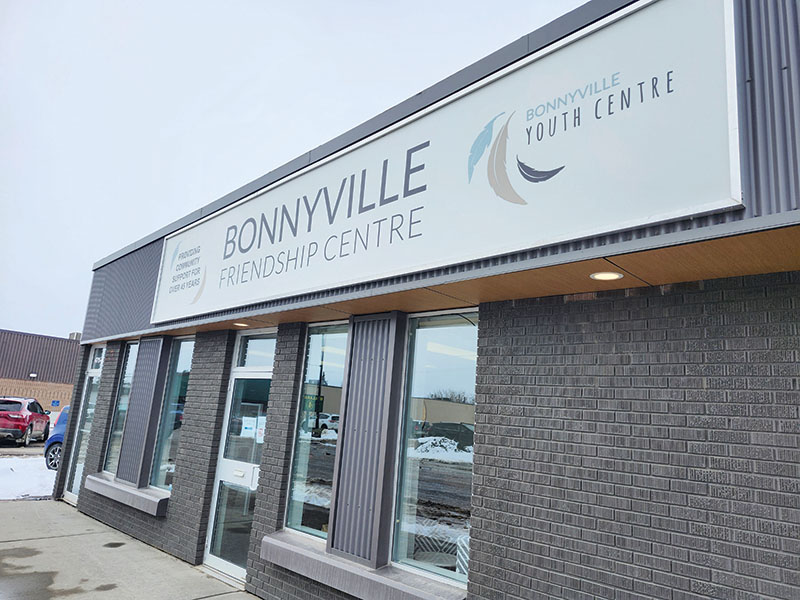
“Although the number of unique individuals over 55 has not increased excessively with inflation, the number of visits from those individuals over 55 and older has increased 142 per cent since 2023,” said Sara Karl, a client support worker with the Bonnyville Friendship Centre’s food bank.
The Cold Lake Food Bank has seen a similar trend. From 2021 to 2023, the Cold Lake Food Bank saw a noticeable year-over-year increase in new clients and in the frequency of visits by those who were 51 years and older.
In 2023, a total of 872 older adults used the Cold Lake Food Bank for the very first time. That year the food bank was used 7,125 times by seniors.
Since then, the total number of seniors using the food bank has slowly begun to recede. However, the average number of visits per client has increased from an average of six visits per year to 10 or more per year.
While older adults make up one of the smallest demographics that use community food banks, this does not mean area seniors are not struggling with food insecurity, says Larry Lambert, chair of the St. Paul and District Food Bank board.
Food insecurity is defined by the federal government as the inadequate or insecure access to food due to financial constraints.
“We find that the seniors in our area are reluctant to come to the food bank,” Lambert said. “Shame has a lot to do with it… a couple of them just would not come to the food bank because they didn’t want anybody to see them.”
The St. Paul and District Food Bank serves about 10,000 clients a year. That includes families, couples, individuals, and older adults.
Lambert has made a point of delivering food baskets to a handful of individuals, some of whom have mobility issues, as well as other seniors who face significant food insecurity but who would not have accessed the food bank services on their own for fear of being seen needing help.
“I made a point of letting them know that I will deliver your food box to you and that part is fine. They accept that and they are very appreciative, but it’s the stigma that’s attached to the food bank or having any kind of social assistance – it is tough on that generation,” said Lambert.
Between 2024 and 2025, the St. Paul Food Bank saw a dip of about 600 clients, which corresponded with a slowing of food inflation during that same period. But Lambert is preparing for a new surge of clients following a string of growing international conflicts.
“It’s going to get worse in the next two months. We are expecting an increase because of the war in Iran and the tariffs. All the grocery prices are going to be astronomical and with the price of diesel up I know that most truckers have added a 10 to 15 per cent [fuel surcharge] already.”
With a growing risk of greater food insecurity looming in the near future, Lambert says, “if someone needs help they should contact their local food bank. There’s no shame in asking for help. No one should have to go without the essentials.”
Food-flation expected to continue
Following the war against Iran and the closure of the Strait of Hormuz, consumers will likely have to brace themselves once again for further spikes in grocery costs. This conflict is now leading to a global energy crisis and a surge in gasoline and diesel prices.
It is anticipated that soaring transportations costs will eventually be downloaded onto consumers in the weeks and months ahead.
As of April 6, diesel was selling at $2.09 per litre in some parts of the province.
How this will affect individuals in the Lakeland depends on their overall income levels, according to the Bank of Canada.
While most Canadians spend around 11 per cent of their budget on groceries, the central bank notes, “Lower-income households in particular are feeling this burden because they allocate much more of their budget to groceries than higher-income households do.”
According to Statistics Canada, households in the lowest income quintile spent more than 27 per cent of their disposable income on food and non-alcoholic beverages in 2024.
To combat rising food costs attributed to external factors, the federal government is introducing the Canada Groceries and Essentials Benefit. The program is set to start this spring and builds on the existing Goods and Services Tax (GST) Credit.
The new benefit will be indexed to inflation and will provide $11.7 billion in additional support over six years to low- and modest-income Canadians, according to the Government of Canada.
A single senior with $25,000 in net income would receive a one-time top-up of $267 plus a longer-term increase of $136 for the 2026-27 benefit year, for a total increase of $402. In total, they would receive $950 for the 2026-27 benefit year.
Beyond the food banks: community agencies can help
There are a few sources for affordable meals

In the face of rising costs for nearly everything—housing, utilities, fuel, and groceries—access to nutritious and affordable meals can significantly affect one’s overall well-being and health.
Addressing access and affordability in one sphere of someone’s life can have a ripple effect in other areas, says Brenda Billo, director of the St. Paul Regional FCSS.
“If somebody can cook at home nutritionally they can save money by not eating out and then that money can go towards their housing,” Billo said.
The St. Paul FCSS recently partnered with Lakeland Primary Care Network (PCN) in hosting a monthly cooking class called “Keep Cooking” for those who are 55 years and older. The class, which costs $10, is expanding to the Town of Elk Point this April due to the program’s success.
Heather Wood, who spearheaded the cooking class, is a registered dietician based out of the Lakeland PCN located in St. Paul.
“It is a great way to bring people together, give them an opportunity to get out of the house and cook with other people. Maybe cook for themselves again for the first time in a while – and take home leftovers,” said Wood.
One of the reasons behind organizing a cooking class geared to seniors was in response to recurring gaps Wood has seen in her practice.
Wood meets regularly with patients navigating new health concerns that require disease management through changes to diet. Many of her patients are referred to her for managing conditions such as diabetes, high cholesterol, and high blood pressure.
“When an individual is coming in to see me for a specific condition, we look at how they can manage healthy eating for that condition on top of financial constraints. It’s a bit of a complex process but we do our best,” Wood said.
“What I’ve experienced is [seniors] are a little bit more open: ‘This is what I can afford and this is what I can’t afford.’ Then we work on things based on what they’re able to manage.”
With diminishing purchasing power and the rising cost of essentials, those on a fixed income are having to get creative when it comes to sourcing the essentials.
“It makes it really tricky to recommend certain healthy foods. Everyone knows that you should be eating more fruits and vegetables, but sometimes that is not an option,” Wood said. “Sometimes it’s about choosing frozen and canned fruits and vegetables or things that are on sale because they are just as nutritious.
“Food insecurity is such a huge topic, and it’s not something that is just going to disappear overnight.”
Frozen meals
Another way seniors in the Lakeland are keeping food costs down is by getting involved with local organizations that offer meal programs that are designed to be both affordable and nutritious.
Age Friendly Cold Lake (AFCL) in partnership with Cold Lake Community Church sells frozen meals prepared by a red seal chef. Costs are scaled based on income.
At full price frozen meals range between $12 to $13, but eligible seniors might pay only half of that depending on their income.
“We are not here to make money. We are here to make sure we have food security in the community and that people have access to healthy food,” said Cathy Aust, the executive director of AFCL.
The charitable organization is focused on helping underserved seniors, low-income seniors, and those who need extra help and support in the community.
In 2025, the first year the frozen meal program ran, AFCL provided 1,020 frozen meals to their clients. Nearly 800 additional meals were sold to other members in the community.
“You are getting a core meal from a red seal chef that is enough for two people or two servings,” Aust said. “Tell me where in town that you can go and get an absolutely delicious meal that is nutritionally balanced and is a large portion size for $12 or $13?”
The full menu can be found on AFCL’s website. However, all meals must be picked up from AFCL’s office during regular business hours. Seniors with mobility issues or cognitive impairments who want to take part in the frozen meals can contact AFCL for help getting their meals.
Meanwhile, the Cold Lake and District FCSS offers a Meals on Wheels program for residents of the City of Cold Lake and Wards 5 and 6 of the M.D. of Bonnyville.
For just $12, a volunteer will deliver clients a full course meal that can be reheated in the microwave.
For those requiring additional support to access healthy foods and essentials there are food banks in nearly every community in the Lakeland. This includes the Bonnyville Food Bank located at the Bonnyville Friendship Centre, the St. Paul and District Food Bank, the Cold Lake Food Bank and Elk Point Helping Hands, which offers a mobile food bank to area residents.