
People today can reach for their phones and connect with anybody in the world.
So why are we so alone?
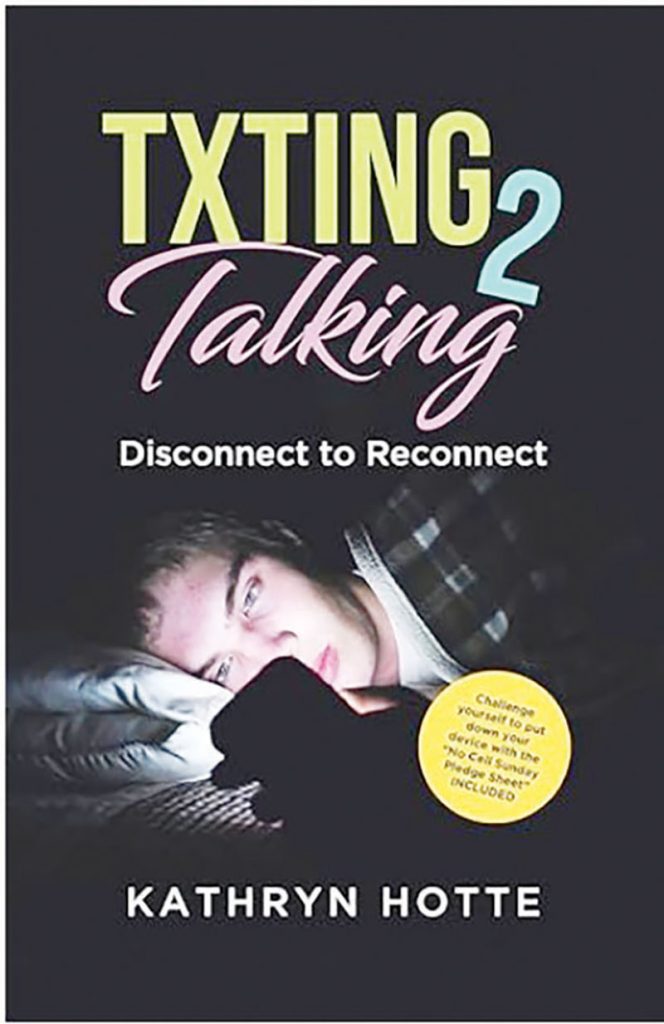
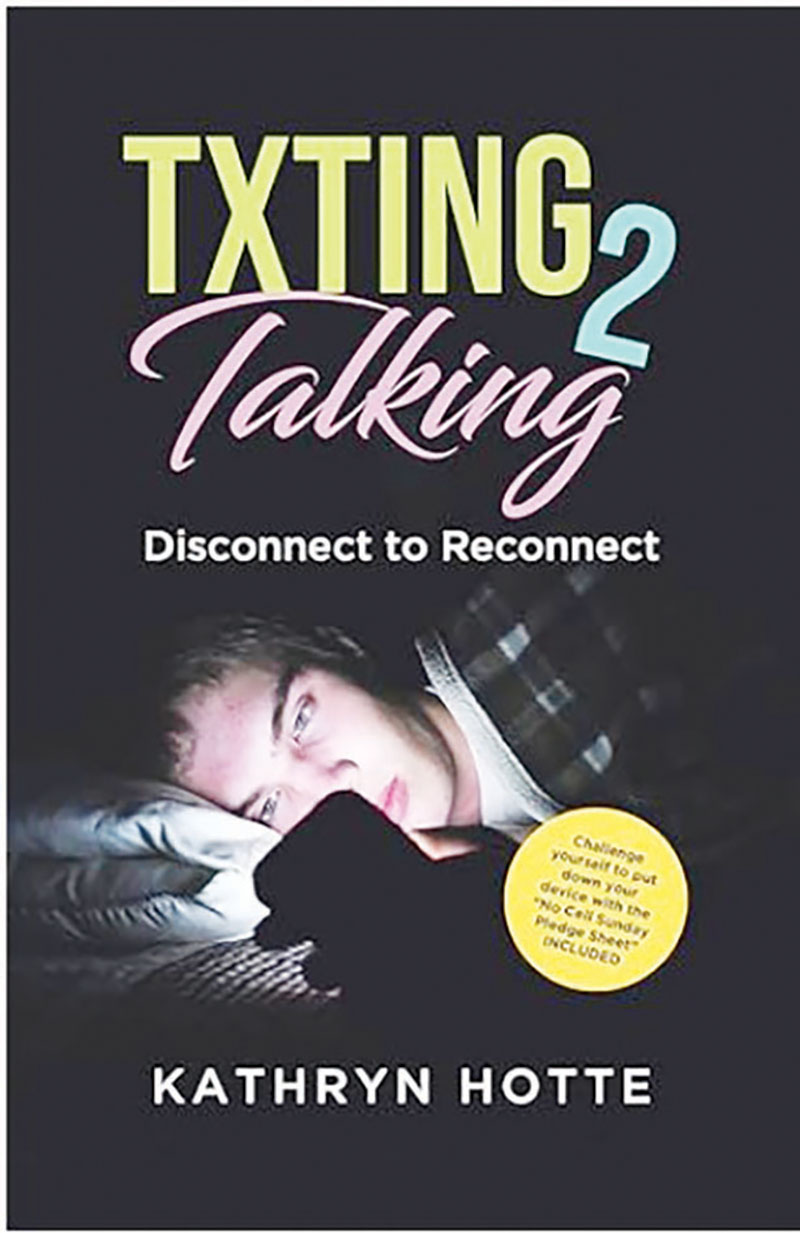
Kathryn Hotte, an Alberta-based training and development professional, says our dependence on electronic technology is robbing us of our ability to communicate on a human level. Hotte’s book, Txting 2 Talking : Disconnect to Reconnect, takes an honest look at the positives and negatives—“the good, the bad, and the ugly,” as she puts it—of living and communicating in the digital age.
Technology “has us more connected than ever, yet more disconnected than ever,” Hotte said.
“Here we are on a planet of over 8 billion humans, and our human-to-human, face-to-face connection is dissolving. And you hear about people having high anxiety, that’s going through the roof. People panic if they can’t find their phone or the internet’s down for five minutes,” she said.
“Everyone’s in a kerfuffle because they have no connection or they feel they have no connection. And then we answer the phone and we ignore the people that we’re sitting with.”
It’s not just a typical older generation’s “kids these days” phenomenon, Hotte says. Amid all the benefits of tech there is a real danger to our physical and mental health, and to our ability to function where it matters most: face to face.
Txting 2 Talking was a one-year project that took Hotte eight years to complete. As she was researching and writing the book, the subject became a moving target—new digital communication platforms were developed and new studies came out showing their effects. For all that though, the book, published in 2024, is an up-to-date examination of our changing culture.
Hotte uses her own observations of the people close to her, including herself. She confesses to once having an addictive obsession with email and a growing dependence on her ever-present smartphone.
For an active business professional, connection is important. But she recognized it was coming at cost to her, and she recognized the potential harm the paradox of being connected and disconnected at the same time could do to society as a whole.
“There is a lot of good, and I’m not denying that. I have my phone, I have my laptop, you do too,” Hotte said. “But there’s also the bad.”
Through Hotte’s observations, interviews with experts, and considerable research on the many aspects of our everyday tech use, she is able to present a balanced and realistic picture of how digital dependency affects our behaviour towards each other.
Her chapter on tech’s helpfulness— “The Good”—is a 12-page examination of the various benefits we get from our devices. The message hits home in the next chapters, though: “The Bad” and “The Ugly” combine for 38 pages warning us of the many medical, physical, and mental health perils associated with overdependency on our devices.
And it’s not just young people preferring to text rather than talk. Our retail transactions are moving more online not necessarily because of better prices, but because we increasingly prefer to buy things without having to talk to anyone.
Hotte tells of a family member in retail management who frequently sees customers come into the store to physically inspect an item, then go home and order it online. And in addition to dealing with non-verbal customers, many retail operations report increasing difficulty finding workers who can engage a customer and provide quality service.
But the point of the book is not to lament a lost world.
Hotte doesn’t fall into the trap of imagining modern adults and kids as brainwashed robots. Instead, she offers advice for each of us on how to stay connected with the real world and how to pay attention to our real relationships. The book includes self-questionnaires and easy assessment tools for those who want to take stock of their own behaviour, and advice on making adjustments.
There is also advice, games, and challenges that families can use to promote personal interaction. One example is having everyone at a family restaurant outing put their phones in the middle of the table. The first person to pick up their phone for any reason also has to pick up the bill.
But it’s not the punishment that works so much as the reward, Hotte says. Studies back up her own experience that once people get over their initial nervousness, they find they genuinely appreciate their unplugged time. And the result can be better engagement, communication, and community within a family or other group.
Hotte applies these lessons to her professional career as a training and development consultant. She teaches corporate teams and employees the importance of being able to connect on a personal level for the benefit of the workplace and for better customer relations.
(The sessions are conducted in person, of course.)
Texting 2 Talking closes with an important challenge for all of us to put our phones down and connect. “Disconnect from your phone, stop scrolling, texting and messaging,” Hotte says at the end of the book. “Actually shut down your phone and reconnect like you have never done before.
“Humanity needs it.”
Txting 2 Talking is available at bookstores and online. Kathryn Hotte can be reached for training session bookings at beinspired@hotteconsulting.com